
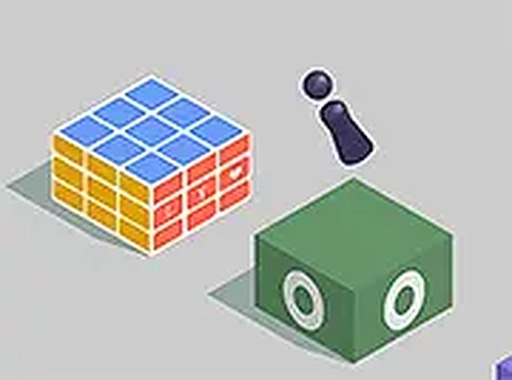
Jumping Champion Arcade Game
Reviews
Jumping Champion Arcade Game strips the jumping genre down to one decision: how long to hold before releasing. That simplicity makes it approachable, while the one-miss-and-done structure gives each attempt weight. The clean visuals and lack of ad interruptions keep attention on the gap ahead. It suits players who enjoy precision challenges in short bursts, though anyone seeking varied mechanics or deeper progression may find the loop limited.
About this game
Hold, Release, Land
Jumping Champion Arcade Game is built around a single input: tap and hold to charge a jump, then release to launch. The longer you hold, the farther your character travels. The next block appears one at a time, so every jump is a fresh distance calculation. There is no speed meter or combo system to manage—only the relationship between how long you hold and where you land.
Why Timing Beats Speed
The game rewards precision over rushing. Because blocks appear sequentially and missing one ends the run, the pressure comes from reading the gap correctly rather than moving quickly. That design makes each attempt short and self-contained, which suits quick breaks or repeated tries. Difficulty rises gradually, so the challenge grows without introducing new controls or mechanics.
Playing Across Devices
Mouse and touch input are both supported, and the layout adapts to mobile and desktop screens. No installation is required, and gameplay is not interrupted by ads. The visual design stays clean so your attention remains on the next block rather than on interface clutter. A high score challenge gives each session a reason to continue.
Building Consistency
Improvement comes from developing a feel for hold duration. Consistent finger or mouse pressure helps produce repeatable jumps, and short breaks can protect concentration during longer sessions. Practicing the rhythm of each jump—rather than reacting hastily—tends to produce more accurate landings over time.
Compatibility
FAQ
Comments
Sign in to leave a review
No comments yet.






Editorial Notes