
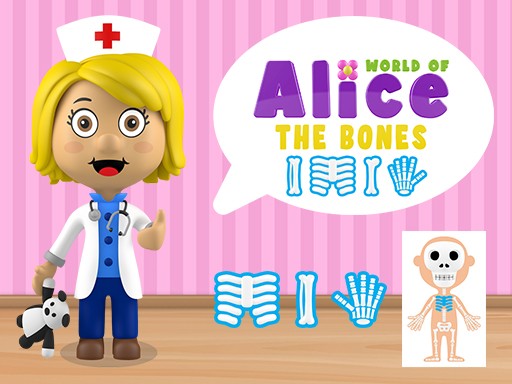
Alice Skeleton Discovery Puzzle
Reviews
Alice Skeleton Discovery Puzzle does one thing clearly: it teaches bone names and positions through repeated tap-to-identify play. The gradual introduction of bones, device flexibility, and no-reading-required design make it accessible for pre-readers. Positive feedback keeps motivation high without scores or penalties. The limitation is depth—it covers naming and location, not function or advanced anatomy. Best for families introducing basic body vocabulary.
About this game
What Players Actually Do
Alice Skeleton Discovery Puzzle asks children to look at a diagram of the human skeleton and tap the correct bone when prompted. Each correct tap triggers encouraging feedback, so the game functions as a repeated identify-and-confirm loop rather than a story-driven adventure. The interaction requires no reading: visual cues guide every step, which makes the game usable by pre-readers and early readers alike.
Progression and Pacing
The game introduces bones gradually instead of presenting the full skeleton at once. New bones appear as earlier ones are understood, so the difficulty curve is really a knowledge curve. Because the experience is self-paced, a child can linger on a familiar bone or move ahead when ready. This structure supports independent play, though a parent sitting nearby can turn each tap into a short conversation about what that bone does.
Design for Young Learners
Bright colors and simple touch controls keep the interface out of the way. The same game runs on cell phones, tablets, and computers, so a child can practice on whichever device is available. Positive sounds and visuals reward correct answers, which matters for this age group: the feedback loop is the main motivator, not scores or unlocks. There is no penalty structure described, so mistakes appear to be treated as part of the learning process.
Where It Fits
This is a foundational biology tool rather than a comprehensive anatomy course. It covers bone names and positions, and it builds familiarity through repetition. Families looking for a low-pressure way to introduce body vocabulary will find the format appropriate, while older students will likely outgrow it quickly.
Compatibility
FAQ
Comments
Sign in to leave a review
No comments yet.



Editorial Notes