
Bounce Balance Arcade
Reviews
Bounce Balance Arcade succeeds as a pick-up-and-play distraction because it asks for one skill: timing a jump so the ball lands centered. Moving boards add just enough pressure to keep runs tense without becoming frustrating. The endless format and lack of time limits suit players who prefer self-paced improvement. Its main limitation is a narrow scope; anyone seeking varied modes or deep progression will find it thin. Still, for short breaks and score chasing, the core loop holds up.
About this game
Core Bouncing and Balance
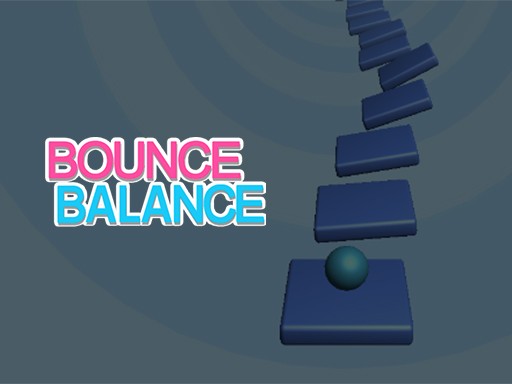
Bounce Balance Arcade puts players in control of a lively ball that leaps from one board to the next. A single tap or click triggers each jump, but the real challenge lies in where the ball lands. Aim for the center of a board to keep it steady; off-center landings cause the ball to wobble or roll, and any fall ends the run. This simple risk-reward loop makes every jump a small decision about timing and placement.
Shifting Platforms and Rising Difficulty
Early boards are stationary and forgiving, allowing players to find their rhythm. As the run continues, boards may tilt or move, forcing quick adjustments mid-jump. The game never pauses to explain these changes; instead, players learn to read board movement and time their taps accordingly. Because the game has no time limits, the pressure comes entirely from the player's own desire to beat a previous score, not from a countdown.
Visual Feedback and Accessibility
Vibrant graphics and smooth animations make each bounce easy to track, which matters when a fraction of a second separates a safe landing from a fall. The controls are intentionally minimal, so players of any age or skill level can start immediately. There are no complex combos or hidden inputs to memorize; improvement comes from practice and focus. This makes Bounce Balance Arcade a natural fit for short sessions, though the endless structure supports longer play for those chasing a personal best.
Compatibility
FAQ
Comments
Sign in to leave a review
No comments yet.




Editorial Notes