
Pixel Cat Dash Arcade
Reviews
Pixel Cat Dash Arcade keeps its scope tight: one cat, two actions, and a path that rebuilds every run. The procedural generation prevents memorization, so improvement comes from timing and attention rather than route knowledge. Pixel art supports readability at speed, and the score tracker gives a clear target. It suits players who enjoy short, repeatable arcade challenges more than those seeking progression systems or story.
About this game
Procedural Paths and Endless Motion
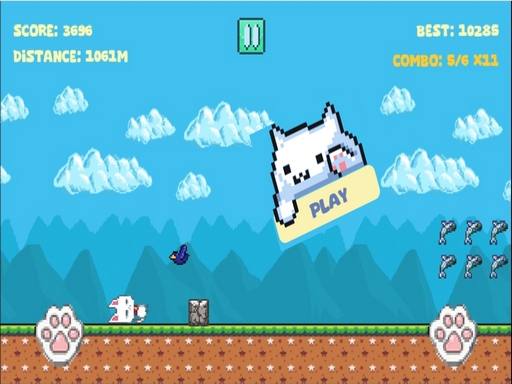
Every attempt in Pixel Cat Dash Arcade sends the cat down a fresh path. Procedural generation rebuilds the layout and obstacle placement each run, so memorizing a single sequence is not an option. Instead, you learn to read the screen and react to whatever appears next. The game pushes speed upward as you survive, which turns a simple forward run into a test of sustained attention.
Jump, Slide, and React
Control is deliberately minimal: tap or click to jump over ground-level barriers, and press down to slide under taller hazards. Some obstacles approach from different angles, so timing matters more than rapid input. The controls respond precisely, letting you adjust mid-run. Because the cat never stops moving, every jump and slide is a commitment. A single collision ends the attempt, making each decision count.
Retro Visuals and Quick Sessions
The pixel-art style gives the game a clear, nostalgic look that keeps the cat and incoming obstacles readable at speed. That readability matters when hazards arrive quickly. Runs are short by design, so the game fits into a break or can be played repeatedly in a longer sitting. A built-in score tracker records your best distance, giving you a concrete target to beat.
Building Consistency Over Time
Higher scores come from rhythm rather than luck. Practicing jump and slide timing at increasing speeds helps you anticipate rather than react. Staying focused on the path ahead, rather than the cat itself, makes upcoming obstacles easier to spot. Keeping calm during faster sections supports quicker reactions. Consistent play teaches the pacing of hazards, which is the most reliable route to a personal best.
Compatibility
FAQ
Comments
Sign in to leave a review
No comments yet.





Editorial Notes