
Portrait Assembly Puzzle
Reviews
Portrait Assembly Puzzle focuses on visual comparison rather than speed or reflexes. You rebuild a target face by selecting matching features, with correct choices highlighted as you go. Difficulty rises by making differences subtler, not by adding time pressure. The lack of penalties and automatic browser saving make it friendly for short breaks or longer sessions. Its main limitation is that the core loop stays the same throughout, so players wanting variety may find it repetitive.
About this game
How the Face-Matching Loop Works
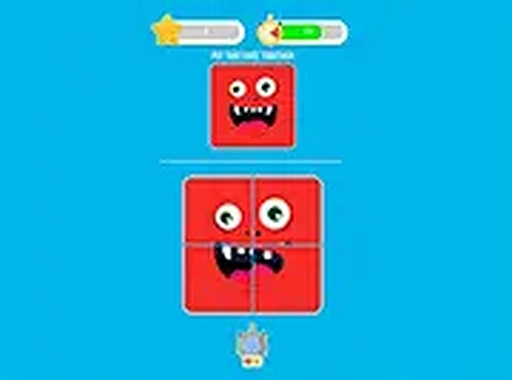
Each puzzle starts with a complete target face. Your job is to rebuild that same face by choosing from separate feature categories, such as eyes, nose, mouth, and other facial parts. The core action is visual comparison: you look at the target, then at the available options, and decide which one belongs. Correct choices move the assembled face closer to the target. There is no timer and no penalty for a wrong pick, so the only pressure comes from your own attention to detail.
Controls and Feedback
Interaction is limited to clicking or tapping on a feature section to cycle through the available styles. The same control scheme works on desktop and mobile browsers, so the game adapts to a mouse or a touchscreen without extra setup. When a feature matches correctly, visual feedback highlights it. That cue lets you track progress without guessing which parts are already solved. Because the interface stays uncluttered, your focus remains on comparing options rather than navigating menus.
Difficulty Curve and Session Design
Early levels use obvious differences between feature options, which gives new players room to learn the mechanics. As you continue, the variations become subtler, and some levels introduce additional features or more similar-looking choices. That gradual shift rewards close observation instead of quick tapping. Since there are no timers or limited attempts, you can pause at any moment. A single puzzle might take a few minutes, making it easy to fit into short breaks, while multiple levels can be completed in one sitting. Progress saves automatically in the browser, so returning later does not require restarting.
Visual Style and Tone
The graphics use bright colors and clean lines. Faces are drawn in a friendly, cartoon-like style that avoids unsettling details, and the background stays simple so it does not compete with the puzzle. This visual approach supports a relaxed atmosphere and keeps attention on feature comparison. The overall presentation is consistent with the casual, observation-focused design rather than a high-pressure challenge.
Compatibility
FAQ
Comments
Sign in to leave a review
No comments yet.

Editorial Notes